International innovation project carried out in Cuban universities
- Written by Redacción ¡ahora!
- Published in Holguin
- Hits: 571
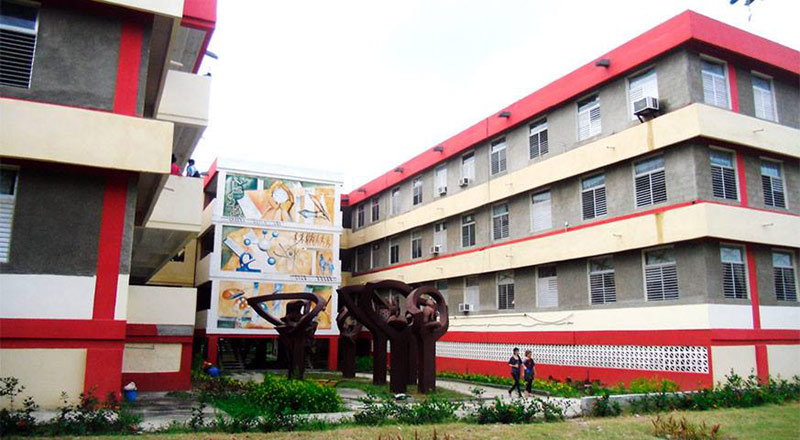
The international Innolabs project is currently strengthening innovation and entrepreneurship at Cuban universities through laboratories dedicated to solving local problems and fostering closer ties between academia and society.
The Vice-Rector of Strategic Management at the University of Holguín (UHo), Marisol Pérez, reported that the initiative is being implemented in institutions in Ecuador and Cuba, such as the Technological University of Havana (Cujae), the University of Cienfuegos, and the Holguín University.
Funded by the European Union's Erasmus+ program, the project promotes the creation of science, technology, engineering, and mathematics (STEM) laboratories. These spaces are designed to develop sustainable programs and address community needs, with young people playing a leading role.
Pérez explained that the laboratories will be equipped with specialized equipment to facilitate the development of practical skills, including prototype creation, as part of the initiative's material contributions.
The region fosters research and events such as the CreLab 2026 Hackathon, focused on finding creative solutions for the construction materials industry, which brought together students from Industrial, Mechanical, and Computer Engineering.
The project coordinator at the Uho explained that, although the initiative prioritizes undergraduate education based on the "learning by doing" principle, it also incorporates postgraduate activities according to the needs identified during the educational process.
Among the main objectives are the promotion of innovative entrepreneurship and professional development, for which the project received support from specialists at the University of Alicante in Spain and academic institutions in Belgium.
The University of Holguín maintains more than 230 agreements with academic and research centers in countries such as Mexico, Colombia, Spain, Ecuador, Brazil, and Romania, which strengthens the quality of teaching in its undergraduate and postgraduate programs. (Source: Prensa Latina)
